
Teil 4: Leseverstehen
Teil 4 der Prüfung, Leseverstehen: Du ordnest Fragen den Textabschnitten zu, bringst eine Geschichte in die richtige Reihenfolge und füllst Lücken mit Wörtern aus einer Liste.
Quiz-Zusammenfassung
0 von 14 Fragen abgeschlossen
Fragen:
Informationen
Sie haben das quiz bereits abgeschlossen. Daher können Sie es nicht erneut starten.
Quiz wird geladen…
Sie müssen sich anmelden oder registrieren, um das quiz zu starten.
Sie müssen zunächst Folgendes abschließen:
Resultate
Resultate
0 von 14 Fragen richtig beantwortet
Ihre Zeit:
Abgelaufene Zeit
Sie haben 0 von 0 Punkt(en) erreicht, (0)
Erzielte Punkte: 0 von 0, (0)
0 Essay(s) ausstehend (Mögliche Punkte: 0)
Kategorien
- Reading 0%
-

Noch nicht geschafft
Du hast weniger als 40 % erreicht. Wiederhole die wichtigsten Inhalte und versuche die Aufgabe noch einmal.
Du kannst die Aufgabe beliebig oft wiederholen. -

Fast geschafft
Wie an einer gelben Ampel kannst du weitergehen, aber dabei etwas riskieren. Sicherer ist es, kurz anzuhalten, die Aufgabe zu wiederholen und erst bei Grün mit der nächsten Aufgabe weiterzumachen.
Gelb ist ein Rat, kein Stopp: weitermachen darfst du trotzdem. -

Gut gemacht!
Du hast mindestens 60 % erreicht. Die Ampel ist grün – du kannst mit der nächsten Aufgabe weitermachen.
- Überprüfen / Überspringen
- Beantwortet
- Richtig
- Falsch
-
Frage 1 von 14
1. Frage
In the next five tasks you will read parts of the text. Match a question to each part. You may use a question only once. Two questions are not needed.
PART 1
If you’re looking for a different type of pet, why not try a spider – or should I say a very large spider – a tarantula? Many people have a tarantula as a pet. Tarantulas don’t need much space or a lot of looking after. There are many different species to choose from but the one most people own is the Chilean rose.
Question:
RichtigFalschTipp
Lies den Abschnitt ganz und frag dich dann: Worum geht es hier insgesamt? Ein einzelnes gleiches Wort reicht als Zuordnung nicht — zwei Fragen bleiben übrig.
-
Frage 7 von 14
7. Frage
PART 2
They do bite, but their bites aren’t as bad as people think. If you are bitten, you won’t die – but it might hurt. Their bites are like bee stings – they hurt and one or two people may be allergic to them. The small hairs on the spider’s body can also annoy people’s skin.
Question:
RichtigFalschTipp
Der Abschnitt dreht sich um Folgen für den Menschen: Bisse, Schmerz, Haut. Such die Frage, die genau dieses Thema aufgreift, nicht nur ein einzelnes Wort.
-
Frage 7 von 14
7. Frage
PART 3
Their favourite food is crickets and other insects. They don’t need a lot of food and it doesn’t have to be regularly. If they eat a good meal once a week, that is usually enough. Tarantulas also need a bowl of water, so a small bowl is always a good idea – however, the water mustn’t be deep because a spider can fall into it and die. Put a small stone into the water so that the spider can climb out of it easily.
Question:
RichtigFalschTipp
Hier geht es um Futter und Wasser. Achte auf Menge und Häufigkeit — die passende Frage zielt auf die Versorgung des Tieres.
-
Frage 7 von 14
7. Frage
PART 4
Spiders usually frighten people but even the big ones are normally frightened of people. Holding tarantulas is not recommended because you can hurt them and they can hurt themselves by jumping off your hand. They also run very quickly, so they can easily escape if you are not very careful.
Question:
RichtigFalschTipp
Der Abschnitt beschreibt den Umgang mit dem Tier: Anfassen, Angst, schnelles Entwischen. Wähle die Frage, die auf Verhalten und Vorsicht zielt.
-
Frage 7 von 14
7. Frage
PART 5
You don’t need a lot of space but different types of tarantula need different things. Some like to hide underground, so they need somewhere to do this. Others like to climb, so they need height and branches. But all of them like dark holes for shelter– and they like to be warm.
Question:
RichtigFalschTipp
Platz, Verstecke, Klettern und Wärme stehen im Mittelpunkt, also die Unterbringung. Behalte im Blick, welche Fragen du schon verbraucht hast.
-
Frage 7 von 14
7. Frage
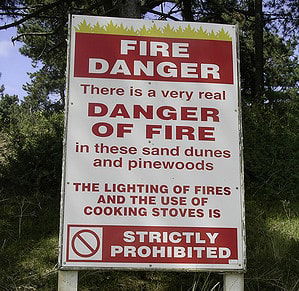 Look at the sign and then answer the questions using one to five words. Use the same words as on the sign.
What is the problem and where?
-
Problem:
Where:
Richtig 2 / 2 PunkteFalsch / 2 PunkteTipp
Nimm die Wörter genau so vom Schild, wie sie dort stehen, ohne umzuformulieren. Die Gefahr steht meist oben, der Ort darunter; ein bis fünf Wörter genügen.
-
-
Frage 8 von 14
8. Frage
Put the parts of the story into the correct order so that you can read it.
The story starts like this:
Chelsea had always wanted to work for a television company and last week she received a letter.
-
"Dear Miss Charles," it started – and, missing out the boring bits, "… we would like to talk to you on Tuesday at 2 p.m. in our Paris office."
-
Yeah!" she screamed – but then she thought about the invitation. She would have to fly and she had never flown before – and she didn't drive.
-
Her friends all told her flying was no problem, but she didn't believe them. Tuesday was going to be a nightmare.
-
On Sunday she sat in front of her computer and knew that she had to book a ticket to Paris. She googled "London to Paris" and looked at the websites in front of her. Suddenly she saw something.
-
"Why didn't I think of that?" she said to herself. "I can use the train, of course." So she booked herself onto the early morning Eurostar from London to Paris – it was even quicker than flying there!
-
On the way home from Paris she decided to phone her best friend, Jana – "I told you flying was no problem," Jana said. Chelsea didn't know what to say as she looked out of the train window.
Richtig 6 / 6 PunkteFalsch / 6 PunkteTipp
Sortiere nach dem Zeitverlauf: Achte auf Signalwörter wie then oder suddenly und auf Wörter wie it, die sich auf einen Satz davor beziehen.
-
-
Frage 9 von 14
9. Frage
Read the text carefully. Complete each gap with a word from the list. Four words are not needed.
The Navajo are the tribe of Native Americans. They came from Canada and settled in the American south west. Here, they met the Pueblo Indians who were farmers. The Pueblo Indians the Navajo how to farm and how to make things such as ceramics, jewellery and cloth. They probably gave the Navajo their name which means „the people“. Traditionally, the men hunted and made the for the tribe. The women grew crops and looked after the home and the children. The men also made the jewellery and were good . In the 17th century, the Spanish brought animals to the area and the Navajo soon had horses and sheep. They also became traders, their cloth, blankets and other items that they made. The Navajo lived in villages. Their houses were wooden poles and mud. These houses were called Hogans and the door of a Hogan had to face east to the sun. Most Navajo now live in normal houses, but in small communities modern Hogans can be seen which are used for special events. The Navajo still live on their land, which is known as the four corners region: Arizona, New Mexico, Utah and Colorado. They call this land a reservation. The reservation has its own and laws – it’s like a small country but it is still part of the USA. It is, however, a very dry area and mainly desert.
Richtig 9 / 9 PunkteFalsch / 9 PunkteTipp
Lies den Text erst ganz durch, bevor du einsetzt. Prüfe bei jeder Lücke, welche Wortart davor und danach passt. Dass vier Wörter übrig bleiben, ist so gewollt.
-
Frage 10 von 14
10. Frage
In the next five tasks you will read the answers (one to five) that were given in an interview about a person’s home town. Match each answer to a question.
Answer 1
I come from Darlington in the north east of England. It’s a nice place to live and it has many interesting aspects. Darlington is about half way between York and Newcastle. It’s a large town with a super clock in the middle of the town centre – it’s a copy of Big Ben, but smaller.
Question:
RichtigFalschTipp
Die Antwort nennt Ort, Lage und ein auffälliges Bauwerk. Überleg, welche Frage jemand ganz zu Beginn eines Interviews über die Heimatstadt stellt.
-
Frage 6 von 14
6. Frage
Answer 2
It’s very different. The east coast is only 30 to 40 minutes away by car. Although Darlington itself is quite flat there are many hills near it. When I drive for half an hour, I can be in lovely hills and valleys with pretty villages and rivers. The Lake District is also not far away, which is perhaps one of the most beautiful places in Britain. So the area is nice to live in.
Question:
RichtigFalschTipp
Diese Antwort beschreibt Küste, Hügel und Täler. Such die Frage, die nicht auf die Stadt selbst zielt, sondern auf das, was rundherum liegt.
-
Frage 6 von 14
6. Frage
Answer 3
The north east is a very friendly place. This has something to do with former times when communities were poor and people had to help each other. Of course, this has changed a little but you’ll still find most people who were born in the area to be very friendly.
Question:
RichtigFalschTipp
Hier geht es nicht um Orte, sondern um Menschen und ihre Art. Die Erklärung aus früheren, armen Zeiten zeigt dir, worauf die Frage hinauswill.
-
Frage 6 von 14
6. Frage
Answer 4
Yes and no. My town has an awful football team, but a lot of people still support them. The town hasn’t got that strong passion for one sport compared to Newcastle, for example, where football plays a big role in the community. A lot of people play cricket or rugby, go fishing or play golf, but these are nothing special.
Question:
RichtigFalschTipp
Die Antwort beginnt mit Yes and no und zählt Fußball, Cricket, Rugby und Golf auf. Frag dich, welches Themenfeld damit abgefragt wird.
-
Frage 6 von 14
6. Frage
Answer 5
Yes, it is … but not many people know about it – isn’t that strange? Darlington was the birth place of the railways. Here, the first passenger train began and Darlington then developed as a town where trains were built including many well-known ones. Darlington was also a Quaker town – the Quakers were a religious group where rich and poor were equal in status.
Question:
RichtigFalschTipp
Eisenbahn, erster Personenzug und die Quäker gehören alle in die Vergangenheit der Stadt. Danach richtet sich die Frage, die hier passt.
-
Frage 6 von 14
6. Frage
In an information brochure for new pupils the head teacher at King George’s School wrote about the school’s uniform. Read what she wrote and then fill in the table below in one to five words. Use the same words as in the brochure.At King George’s School we like our pupils to wear school uniform. We no longer have the traditional one where the pupils wore jackets, shirts with ties, grey trousers and black shoes – even the girls. We talked with parents and pupils about a new uniform that everyone would like and then we introduced it. It was very successful. Our uniform is now an attractive light grey polo shirt, black trousers or skirt and black shoes.
Our pupils like their new uniform because it looks modern and, of course, they needn’t worry about fashions; they can keep their expensive clothes for when they are out of school. For parents, our school uniform is very cheap to buy. Finally we like our new uniform because our pupils look nice in it and when they are out of school on trips, it is very easy to see where they are.
I hope that you will continue to support the school in its school uniform policy.
-
Theme the new school uniform Reasons why pupils like the uniform a.
b. they needn’t worry about fashionReason why parents like the uniform
Richtig 2 / 2 PunkteFalsch / 2 PunkteTipp
Such die Stellen im Brief, an denen die Schulleiterin begründet, warum Schüler und warum Eltern die Uniform mögen. Übernimm die Wörter wörtlich, höchstens fünf.
-